Appliance Repair Trends
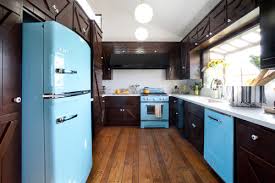
About 10 years ago, I was asked by the Wall Street Journal if stainless was going out as a design trend. They seemed to think so. I told them no way (funny, they never called again). In my opinion only niche companies embraced color, so there was not enough exposure. Flash forward 10 years, GE and Whirlpool have embraced color, but does that constitute a new trend?Get our free Appliance Buying for features and product comparisons of all the major brands » I started at Yale in 1986 just as the last color trend of coffee (brown), coppertone (browner), Harvest Wheat (somewhat gold) and Avocado (green) were winding down and being discontinued. Whirlpool would introduce a few designer finishes later like platinum (grey). For the remainder of the 90s, it was white (often with walnut accents) and almond, which was later renamed bisque and black. The next big fashion trend was monochromatic white also known as white on white. White was overwhelmingly popular until stainless steel would become the favorite in the mid 1990s.

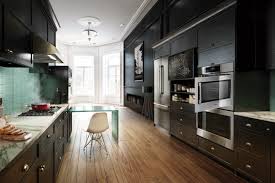
Hard to believe 20 years ago this was all white, bisque and black. The professional ranges of Dynasty, Viking and 5 Star were the first to feature stainless steel in residential appliances. They adapted the commercial style to the home. However, the real early pioneer was Frigidaire. If the professional companies created the trend, then Frigidaire popularized it. You could buy a Frigidaire stainless kitchen for under $5,000 (now under $2,000). Most of the other companies waited to see if it was a passing trend. That’s how Frigidaire became a brand name again. Stainless has the advantages of being more durable, but its high end look matches every cabinet style in a way the other colors do not. After 20 years of being the dominant style, is stainless finally fading? Let's look at the options. If you live long enough, you will see old styles become new trends. The newest is high tech white. It is a more contemporary version of the monochromatic white. Whirlpool calls it White Ice

GE has a retro finish called “Artistry” Miele has even jumped on the style. We have it on display GE has two interesting dark finishes: Artistry Black and Slate Slate looks like a contemporary Coppertone It's funny, 20 years later, we are back to white and black as high end colors. La Cornue is a French range with about 20 colors. This is probably the best execution of color, and they have about 20 (we now carry this line). Viking has several different color options as well There are several other lines like Bertazzoni, Ilve and Smeg that other different colors as well. There is a certain allure to be being totally different. From that standpoint, I like color. You will probably still buy stainless steel. I like color in certain situations, maybe as a one product focal point. Buy a range in blue, but not the whole suite. There is a problem with buying colors. If Slate does not sell, then GE will discontinue the finish. 6-10 years down the road, you will have to replace the whole kitchen because of a single unrepairable unit.

Companies are skittish in carrying products that do not sell over the long term. You are also married to that one manufacturer.
String Lights For Wine BottlesMixing GE and Whirlpool would not look coordinated, whereas most stainless appliances from different companies will match.
Charcoal Labrador Puppies For Sale In Wisconsin Lastly, colors do not match every cabinet type like stainless.
Hp Laptop Parts ReplacementI would use that Miele white in a high tech contemporary kitchen, but probably would not with wood tones. So yes, you should consider color in certain situations for one item, and buy the rest as stainless. Get the Yale Appliance Buyers Guide with features, specs and inside tips to all the brands.

Well over 100,000 people have read a Yale Guide.The U.S. market for home appliances is changing dramatically, but it’s not so simple a change as “growth.” Although the industry is expanding, economic and technological forces are shaping both consumers and appliances into something wholly different than what we’re used to. A growing wave of mass connectivity and an improving—or rather, adapting—economy spell challenges for manufacturers, and confusion for the fractured, irregular nature of U.S. consumers. Since the trough of the recession in 2009, big leaps in appliance innovation have unfolded despite tepid confidence among many consumers, particularly those in the middle income bracket. The fact is, enthusiasm for appliances is eclipsed by enthusiasm for personal electronics. Between 2007 and 2010, U.S. spending on home appliances fell by roughly 3.6 percent—compared to a 1.8 percent increase in television, computer, and mobile sales, according to The Wall Street Journal.
So for major appliance makers like Whirlpool, Samsung, LG, and GE, the focus is now on driving innovation in the appliance market—exciting innovation, innovation that's apt to attract wary consumers. But this can sometimes seem like companies are throwing ideas at the wall to see what sticks. It's why you see seemingly nonsensical products emerging, like Samsung’s tablet fridge, LG’s Blast Chiller, or Siemen’s camera fridge. It’s also why appliance makers are swooping in on “smart” functionality and home automation. Kurt Jovais, vice president of marketing at Samsung Electronics America, says the business goal of smart tech is to unite appliances—traditionally disconnected, standalone devices—with the mass connectivity afforded by mobile and web technologies. “ in an interview last year. “So that interaction goes from being a one-way interaction to being a multi-directional interaction between the user of the home appliance and other nodes.” For everyday consumers, though, the sales pitch has been hit or miss.
In 2012, Navigant research reported that the fledgling smart appliance market was valued at $613 million, compared to the wider $30 billion general appliance market. Of course, the recession is still the elephant in the room. The fact is, Americans are nowhere near their pre-recession consumption levels—across all products—and the bifurcating state of U.S. income levels is posing additional challenges to manufacturers. In the U.S., the median household income has fallen by 4.4 percent since June 2009, and by 7.2 percent since January 2000 (inflation adjusted), according to a June report by Sentier Research. Meanwhile, the average American income remains 6.1 percent below the pre-recession level of December 2007. Combined with consumers’ preference for personal electronics in times of economic hardship, this outlook spells trouble for appliance makers. Despite grim income trends, appliance sales have been slowly rebounding from the depths of the recession and are poised to accelerate in 2014.

Small kitchen appliances, for example, enjoyed substantial growth in 2013, and 2014 projections for major household appliances are mostly optimistic. Perhaps most notably, Whirlpool—the world’s largest appliance maker—recently elevated its 2014 earnings forecast to reflect an improving U.S. housing market. As it turns out, it may be a renewed interest in building that's driving consumer demand for new appliances, rather than a simple desire to upgrade. Last year, U.S. homeowners spent $130 billion on remodeling projects, according to the Wall Street Journal. That’s up 3.1 percent from the previous year and the largest amount of home-remodeling spending since 2007—the year the housing downturn began. More recently, the National Association of Home Builders reported record-high confidence among builders. All this is likely to translate to a surge in appliance demand for 2014, but given the transitional state of the technology that drives the appliance market the question becomes: How will manufacturers service consumer demand while also meeting the connectivity standards of an increasingly mobile-equipped world?

The U.S. income gap is not presenting itself as a simple drag on consumer spending. On the contrary, as the above data shows, that type of spending is starting to return. What’s different now is that a larger pool of that capital is coming from a smaller market of buyers—namely, the wealthy. Fewer consumers are contributing a larger share of revenue. According to the Institute for New Economic Thinking, the top 5 percent of earners accounted for nearly 40 percent of all personal consumption spending in 2012—up from 27 percent in 1992. In the appliance world, that has translated to greater demand for high-end products. For example, LG recently announced plans to ramp up distribution of its premium Studio Series appliances. "With the U.S. real estate market in recovery, we are expecting to see an increase in consumer demand for upscale appliances for new homes and remodeled kitchens," said Seong-jin Jo, president and CEO of LG Electronics Home Appliance Company, in a statement last month.

Similarly, the New York Times recently reported that GE’s current fastest growing line of appliances is its Café line, which is also aimed at the top quarter of the market. “This is a person who is willing to pay for features, like a double-oven range or a refrigerator with hot water,” Brian McWaters, a general manager at GE Appliances, told the Times. So in addition to a U.S. market that is demanding improved connectivity standards in service of growing home automation trends, appliance manufacturers must also contend with a market that is still not fully recovered from the recession and increasingly dominated by high-income earners—a complicated outlook indeed. This does seem to explain the growing interest in home automation, which is being pushed more by manufacturers than consumers. Google’s recent acquisition of Nest is just the latest example of an industry that is devoted to unifying the various gizmos and gadgets that make up the modern home. Recent forays by Samsung, LG, Electrolux, Whirlpool, and GE—basically, anyone important in the U.S. appliance sector—further point to a market that is technologically prepared, but has thus far lacked consumer interest.