Full Spectrum Light And Vitamin D
Some full-spectrum fluorescent lamps are promoted as producing ultraviolet (UV) radiation. This is peculiar, since in general, UV radiation should be avoided. UV radiation fades and deteriorates architectural materials and works of art. Even though full-spectrum lamps might improve the color appearance of artwork, museums specifically require all radiation shorter than 400 nm to be filtered completely from light sources illuminating environmentally sensitive pieces, such as watercolor paintings, and historical artifacts (Rea, 2000). Except in certain unusual cases, it is also undesirable for people to expose the eye or the skin to UV radiation. Adverse effects of excessive UV radiation include sunburn (erythema), cataracts, and skin cancer (Rea, 2000). Several organizations, including the Illuminating Engineering Society of North America (IESNA), the American Conference of Governmental Industrial Hygienists (ACGIH), and the National Institute for Occupational Safety and Health (NIOSH), have specified acceptable limits for occupational ultraviolet exposure (IESNA, 1996;

However, skin exposure to a fairly narrow band of UV radiation, UVB between 290 and 315 nm, can promote the synthesis of vitamin D, which is necessary for proper bone development and maintenance (Holick, 1985). Dietary sources of vitamin D, including dairy and fish products, provide sufficient vitamin D to have eliminated the incidence of bone-related problems such as rickets, in modern society (Jablonski and Chaplin, 2002.). These dietary supplements therefore minimize the importance of UVB radiation exposure for most people. Full-spectrum fluorescent lamps that produce UV radiation use special phosphors with peak emissions in the UVA band (315 nm-400 nm), typically at 355 nm. Although the relative amount of UV radiation emitted by these lamps may be the same as a particular phase of daylight, the absolute amount of UV radiation they emit is quite small. For comparison, approximately 22 minutes of sunlight exposure near midday will produce 1.5 minimal erythema doses (MEDs) of UVB radiation exposure, enough to induce a pronounced temporary increase in vitamin D concentration (Holick, 1985).
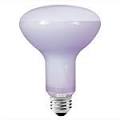
One MED is the amount of exposure that produces noticeable skin redness, so the exposure needed to affect vitamin D levels is substantial. Based upon the published data from one manufacturer of fluorescent lamps emulating the UVB content of daylight, it would take at least 30 hours of constant exposure to these lamps when operated at ceiling height to provide 1.5 MEDs (see the CASE STUDY ).
How Many Yards For Shower CurtainBased on UVB intensity data from another study (Ball, 2002), eight hours in an office or classroom under a claimed full-spectrum lamp will produce a smaller ultraviolet dose than one minute spent outdoors in bright sunlight.
Little Red Express Air Cleaner For Sale Indoor environments such as offices and schools further reduce UV exposure because most lighting fixtures and architectural materials absorb UV radiation.
Toilet Paper Holder Too Small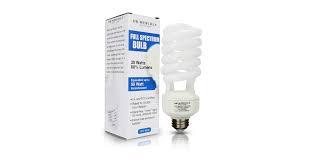
UVB radiation that does not strike the skin directly is unlikely to reflect off objects, floors, and walls back to the skin. The resulting exposure level will be well below the threshold for measurable vitamin D production. Therefore, fluorescent lamps claiming to emulate the relative UV content in daylight can be disregarded as a viable source of UVB radiation for humans. Since there are no known benefits to human health from UVA radiation, it can be further concluded that the modest amounts of UV radiation produced by these lamps have no beneficial impact on human health. Ironically, even small but constant amounts of UV (UVA and UVB) radiation will eventually degrade a wide variety of architectural materials such as carpet and cloth, wood products, and printed matter. One claim occasionally cited as a benefit of fluorescent light sources emulating the UV content of daylight is the enhanced brightness of paper and clothing treated with whitening agents. Fluorescent whitening agents are used to counteract the otherwise yellow appearance of paper and cloth, making them appear whiter and brighter.

To assess this claim, NLPIP compared the relative luminance of white paper and of white cloth illuminated alternately by two fluorescent lamps of identical correlated color temperature (CCT), one claiming to emulate the relative UV content of daylight and one without the UV phosphor. By causing the whitening in the cloth or paper to fluoresce, the UV radiation from these lamps should produce higher luminance for the same given illuminance. Indeed, the measured luminance of a white paper sample and of a white cloth sample were 1.7% and 2.3% higher, respectively, when illuminated by the full-spectrum fluorescent lamp with more UV radiation. These effects were also perceptible when alternatively viewed, but any assumed benefits of these relatively small brightness-enhancing effects have never been documented. It should also be noted that lamps emulating the UV content of daylight have about 30% to 40% lower lamp efficacy (lumens per watt) than conventional fluorescent lamps of the same CCT, partly because additional electric power is required to generate the invisible UV radiation.

In summary, there are no known health effects from the UV radiation generated from these lamps, but the UV radiation from these lamps can be harmful to many of the materials commonly found in architectural spaces. Further, although the UV radiation generated from these lamps can induce relatively higher luminance in white paper and clothing, the loss in lamp efficacy needed to produce the invisible UV radiation is substantially greater than the fluorescence-induced luminance resulting from UV radiation.Vitamin D from UVB lamps UVB 4 bulb $425 5 minutes UVB 1 bulb $150 (with shipping) 5 minutes There have been many papers indicating that UV is better than just vitamin D - such as: Easy and cheap way to get vitamin D all year long = Bulb at home Costs and minutes vary 3 to 1 due to: skin color, amount of skin exposed, purchase price, bulb life, etc 1 Law requires reduction of UVB Typically 3% of tanning bed output ==> 12% of sun 2 Full-spectrum light does not need eye protection - the eye avoids and squints in bright light

3 Vitamin D bulb has 1/20 of the UVA per minute of UVB than tanning bed - and very low intensity - so very unlikely to get skin cancer 4 Minutes to get 2,000 IU of vitamin D. Tanning beds often have less UVB than sunIntensity is relative to the sun = 1.0; UVB is needed to produce vitamin D 6 SAD lamps are required by law to have ZERO UV (A or B ) 7 Assumes 2000 uses till source needs to be replaced - except salon - where you also must pay for staff - building - etc The bulbs are very low cost. - and far less expensive/troublesome than going to a tanning salon many times a month Some places to buy UV bulbs are Amazon Pet store and Reptile UV store http://uvguide.co.uk/ and as well as Google Shopping The instructions on the bulb (but not on internet?) say that it must be mounted VERTICALLY to operate properly Note1 - It does not appear to work if you have recently moved it. Seems like waiting for 5 minutes works Note2 - It also turns itself off when it overheats.
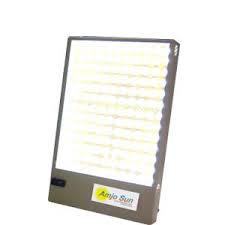
Unplug it and wait for perhaps 30 minutes Takes too long to download as a thumbnail example: fullsepectrumsolutions emphasize that their lights contain NO UV - - - - - - - - - - - - - - - - - - Update 1 year later (Nov 2011) Amazon has many UV bulbs to choose from. I wanted a light which had visible as well as UVB wavelengths so that my eyes would squint and I would not look into the light much. This type of bulb was also much lower cost that the UV-only bulbs. I am considering a UV-only bulb for a phase II design, but have not figured where to put it in our RV I wanted to get more UV per minute just so I could spend less time in bed. I will probably stick to existing design which is much very close to true sunshine. I selected a brand popular with owners of pet reptiles = documented as actually found to contain UV, have a long life, etc. I then selected the maximum wattage which they made = 160 watts to reduce the amount of time needed to get my vitamin D.
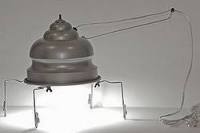
Note: There are many ways to increase the amount of vitamin D you can get from the bulb. I purchased a Flucker - which currently has poor reviews on Amazon. The Zoo Med product has better reviews but is more expensive. The bulb purchased has worked well. Have tended to use it about 30 minutes a day at noon during the winter. Found that using it late at night kept me awake too long. I estimate that with a home-made reflector the bulb to concentrate the light onto my skin gives about 1/10 of the UVB that I would get from the summer sun at noon in Seattle. This estimation is based on calculation, the perceived heat, a small UV detection card which I purchased, and a very slight tan after about 10 sessions. The reflector (not shown in the photo) also reduces bothering my wife as well as possible bleaching out of the cloth and woodwork. The mercury vapor inside of the bulb are totally enclosed, just as mercury vapors are inside of standard or compact fluorescent bi;bs

There is no health danger from any of those bulbs unless they break, and even then it is very minor: see WikiPedia. In the 17 months since the page was initially posted: 4000 people have looked at it 300 have downloaded some of the attached files. 7 people have contacted me for more information. I have found it is not cost effective I estimate that I get less than 500 IU per hour from the use of the lamp. (This is when I was using the 160 watt lamp, having the lamp closer than shown in the photo, and using a deflector to concentrate the light onto my skin) Since a 5,000 IU capsule of vitamin D costs just 3 cents, the value of my time under the sunlamp is about 1/3 one cent per hour. So, I no longer use it I am considering an alternate design - a low power UVB LED which would shine on my face and arms while using a computer Found a 1 watt UVB LED - but very new on the market - costs aobut $500!! Vitamin D from UVB lamps Exo Terra Repti-Glo 10.0 Compact Fluorescent Desert Terrarium Lamp

Amazon $17 26 watt, 10% of output in UVB Measured UVB light with Vitamin D meter With good reflector, young skin, and if able to illuminate 10% of body area it should produce per minute: 15 IU at 5 inches and 50 IU at 2.5" Since it is difficult to imagine illuminating 10% of body area at 2.5",I will assume about 30 IU per minute when the lamp is near, or about 2,000 IU per hour Since 2,000 IU vitamin D supplement costs about 2 cents, you have to ask yourself "is my time worth 2 cents per hour". Thoughts for use in the livingroom/office It could be mounted in a ceiling fixture with several other bare bulbs: Example 1. The fixture must have no glass between the bulb and your skin - Glass absorbs ALL UVB The other bulbs would provide visible light. You would probably need to wear glasses to keep the UVB from damaging your eyes. The following is a wild guess at the output, with lots of assumptions It appears that ReptileUV Zoo (below) has 1919 microwatts/cm2 @ 12" and 147 microwatts per cm2 @48" = 65 IU/minute
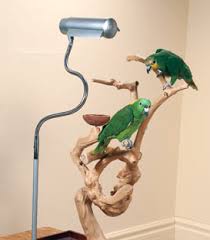
Since this bulb has about 1/5 the output of ReptileUV Zoo (400 instead of 2000 microwatts) - assuming the same 12" Then this bulb will have about 65/5 = 13 IU/minute - we assume this is per cm2 Assuming you have 100 cm2 of skin exposed (in office/home setting, wearing lots of clothes), you will get 1300 IU per minute This seems far too large - one or more of the assumptions must be in error The following is a fuzzy spectra from a PDF at their website from Minutes in the Sun for 1000 IU Skin percentages: Face 3.5%, neck 2%, trunk 26%, hands 6%, arms 14%, legs 14%, thighs 18%. Have added reflectors to increase the light getting to the skin Average distance from bulb to body = 30" You can decrease by about 40% the amount of 'bulb time" needed by using suntan oil Based on my fear/ignorance I have decided to not use that low intensity light source. Also, the 18' tubes would have required much much longer time to get the same amount of vitamin D, assuming that it produced enough to generate any.