Hot Tub Electrical Box

Home / Electrical Installations & Repairs, How To Articles / Wiring a Hot Spring Bengal Spa / Hot Tub I wired a Hot Spring Bengal spa / hot tub the day after Christmas. I don’t usually work the day after Christmas, but this was a favor for a friend. This was a “quick and easy” installation, it took me approximately 2 1/2 hours. I took advantage of the opportunity and took pictures to share with you on how to wire a 240 volt hot tub. Because of the potential danger of electrocution in a hot tub, all hot tubs are required to be GFCI protected. If you are going to wire your hot tub yourself, I highly recommend having an electrical inspector or licensed / qualified electrician look at the installation upon completion and before you use it. That being said, let’s get on with the installation. So, the first thing I did was show up and assess the project. As you can see in the image it is snowing. This is just one of the challenges of working in the mountains in Montana.

Click on any of the images below to see a larger view in a new window. So, the hot tub is in place and the electrician that wired these condos already pre-wired for a future hot tub. This hot tub requires 50 amps at 240 volts to the disconnect. Something that Hot Spring spas does different than other spa manufacturers is they separate the pump and heater loads. The previous electrician left a 6/3 NM cable (romex) with ground. According to the National Electrical Code® (NEC®), this cable has a maximum ampacity rating of 55 amps @ 240 volts. The first thing that I did was remove the PVC junction box… and install the disconnect that was included with this hot tub. The next step is to install the conduit. For this installation, I used 3/4 inch EMT with steel compression fittings. You are required to support EMT within 3 feet of a connector, coupling or box and every 10 feet thereafter. After the conduit is in place, I pulled my wires. I installed 3 – #10 THHN stranded copper wires and 3 – #12 THHN copper wires.
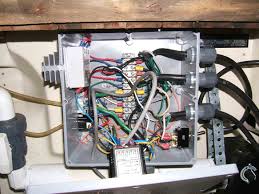
Another point that I should mention is the flexible conduit that I used. In the image below, you will see an odd connection and then the flexible conduit connection to the spa junction box. This is used to absorb the vibration that the hot tub causes when running and it makes the connection to the hot tub junction box easier. After the wires are pulled, I made my connections at the hot tub first. When working with electricity, you always need to think safety first so you don’t get hurt or electrocuted. I’ve had too many people turn on the power when I’m working on something. Now we use strict “lock out tag out” procedures to ensure no one gets hurt. As a homeowner or DIYer, I recommend working back towards the power source when making your connections. If you connect your power source last, then no one can turn it on while you are working on it. You should also connect your ground first, then the neutral and finally the hot wires. Finally, I made my connections at the hot tub disconnect.

Before you turn on the disconnect, make sure there is water in the hot tub or you will ruin the heating elements. Typically, the hot tub supplier will start the tub and add the chemicals. Do you need assistance with your electrical wiring project? Please visit my DIY Electrical Wiring Help from a Master Electrician page. Where I provide electrical wiring tips, expert electrical advice, answers to your electrical questions and electrical consulting & design services over the phone, via instant messenger or via email.
Best Laptops For Soldiers If you enjoyed this post, make sure you subscribe to my RSS feed or receive updates via email.
Interior Wood Shutter PlansYou can also follow me on Twitter and "LIKE" me on Facebook.
Curtains And Drapes For Small Windows
PLEASE REVIEW ALL OF THE IMPORTANT INFORMATION BELOW TO COMPLETE THE PERMITTING PROCESS CORRECTLY , under Departments, Assessment, then Search Records and Property Address. Type in your address and a property profile is available. For paperwork questions contact: For Building, Plumbing, Mechanical or Electrical code questions contact: Specifications and Scope of Work (3 copies each):Provide manufacturer’s specification sheets for the wall construction of the above ground pool to be installed.Provide manufacturer’s specification sheets for all equipment being installed with the pool. pump, motor, filter, heater, etc.Provide manufacturer’s specification sheet(s) for the fence, gate and latch for in-ground pools (see attached requirements).Provide alarm information for in-ground pools, an alarm is required if access to the pool is directly from the home. All contractors need proof of insurance and Upper Macungie Township must be listed as a Certificate Holder (8330 Schantz Road, Breinigsville, PA 18031, 610-395-9355 fax).

If the policy does not include Workers’ Compensation coverage, we need a notarized exemption form. Plumbers and Electricians need a license prior to starting any work. Please provide proof of insurance with the permit. CALL BEFORE YOU DIG 3 DAYS NOTICE IS THE LAW ELECTRIC – POOLS, HOT TUBS & SPAS Bonding Wire Inspection – The bonding wire must be connected from the motor to the frame to the pool before it is back filled. Trench Inspection – The trench is dug for the conduit. Conduit must be installed but wires are not necessary for this inspection. Final Inspection – When all the electrical work is completed. The homeowner must be at home for the Final Inspection so the inspector can access electrical panel box. As a courtesy & for informational use only, I have listed some requirements required for code compliance for most SWIMMING POOL installations. This list does not reflect all items necessary for all installations but may assist your endeavor.

Please review Chapter 42 & Appendix G of the 2009 IRC. 1. Appendix G: Barrier, entrapment & door alarm requirements. 2. N1103: Requires a time switch for the motor & heater if installed. 3. E4202.1: Allowable wiring methods. 4. E4203: Required equipment, receptacles, location, clearances & burial depths. 5. E4204: Required bonding including equi-potential plane requirements. Equi-potential plane requirements include above ground pools. 6. E4002.8 & E4002.9: Receptacles in damp & wet locations must be listed “weatherproof type”. 7. E4002.9: In use covers are required for all receptacles in wet locations. General: The construction and installation of electrical wiring for equipment in or adjacent to swimming pools and all appurtenances thereto shall comply with Chapter 42 of the 2009 International Building Code. Overhead Conductor Clearances: The following parts of pools and outdoor spas and hot tubs shall not be placed under existing service drop conductors or any other open overhead wiring: or shall such wiring be installed above the following:
1. Pools and areas extending 22.5 feet horizontally from the inside walls of the pool; 3. Observation stands, towers, and platforms. Underground Wiring: Underground wiring shall not be installed under or within the area extending 5 feet horizontally from the inside walls of the pools and outdoor hot tubs and spas except where the wiring is installed to supply equipment for the same. 1. Location- A single, locking and grounding type receptacle which is protected by ground fault circuit interrupters and run in conduit, is required for the pump motor which shall be located not closer than 6 feet nor more than 10 feet from the pool, this measurement from the inside walls of the pool. Other receptacles shall not be located less than 10 feet from the inside walls of the pool. 2. Where Required- At least one 125 Volt 15 or 20 ampere convenience duplex receptacle supplied by a general purpose branch circuit shall be located a minimum of 6 feet from and not more than 20 feet from the inside walls of the pool.

This receptacle shall not be located more than 6 feet, 6 inches above the floor, platform or grade level serving the pool, spa or hot tub. 3. GFCI Protection- All receptacles located within 20 feet of the inside walls of the pool, spa or hot tub shall be protected by a ground fault circuit interrupter. Conduit Burial: Unless an exception applies, all conduit must be buried a minimum of 18 inches and electrical conduit ONLY is permitted, no EMT (Electrical Metallic Tubing). Certifications: All pool, spa and hot tub equipment must have UL or other national recognized testing laboratory approval. Any pool equipment without such a rating is not permitted, and any pool equipment altered by consumer or contractor will violate the national rating and will NOT be acceptable. Grounding and Bonding: All equipment shall be properly bonded and grounded as required by this code and all other applicable codes, including but not limited to Chapter 42 of the International Building Code.

Pool Water Bonding: The pool water shall be intentionally bonded by means of a conductive surface area not less than nine (9) square inches (5806 mm2) installed in contact with the pool water. This bond shall be permitted to consist of parts that are required to be bonded in Section E4204.2 (International Residential Code). Switching Devices: Switching devices shall be located not less than 5 feet horizontally from the inside walls of the pools, except where separated from the pool, spa or hot tub by a slid fence, wall or other permanent barrier. Disconnecting Means: An accessible disconnecting means shall be provided and located within sight from all pools, spas and hot tub equipment and shall be located not less than 5 feet from the inside walls of the pool, spa or hot tub. BUILDING CODE – ALL POOLS, HOT TUBS & SPAS Steel- Inspection when rebar is being placed. Steel Reinforcing- Inspection for vinyl liner pools. Final Inspection- When the pool is completed and the lock installed and able.