Tech Companies Moving To Oakland
The Northern California counties that lie across the Bay Bridge from San Francisco have missed out on much of the technology boom. In 2014, tech employment increased 21 percent in San Francisco, to 59,000 jobs, and 4 percent, to 50,000 jobs combined, in the neighboring counties of Contra Costa and Alameda. About half of Alameda County residents, including those living in Oakland, commute beyond it to work and most cross the San Francisco Bay to get to their tech jobs, because average San Francisco apartment rents have climbed above $3,000 a month, 40 percent higher than rents in the East Bay. Highways, bridges, Bay Area Rapid Transit trains, and ferries are nearing capacity.Simply put: “We have overrun the infrastructure,” says Carl Bass, chief executive officer at business software maker Autodesk, which has 8,000 employees spread across several Bay Area offices. “With San Francisco becoming super-crowded and super-expensive, Oakland is now a real alternative.”Developers have begun transforming the city of Bobby Seale and the Symbionese Liberation Army, a place still rocked from time to time by brick-flying protests against cops and corporations, into what they hope will become a hub for tech companies.

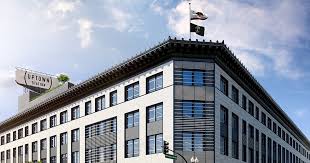
To lure hipster tenants to downtown Oakland, landlords are remodeling old department stores and office buildings into open-plan loft spaces full of exposed brick and timber.On Sept. 23, Uber announced the purchase of Oakland’s old Sears building, which was recently rechristened Uptown Station by Lane Partners, a Silicon Valley-based developer of tech office parks. The space is replete with a ground-floor food court that specializes in locally grown organic delicacies such as tayberries and stuffed squash blossoms. Uber expects employees to start moving into the 330,000 square feet of office space upstairs sometime in 2017 as the company develops a larger campus in San Francisco’s Mission Bay neighborhood.Oakland has about 4.4 million square feet of what real estate brokers call creative space, according to commercial real estate developer Jones Lang LaSalle, with 10.1 percent standing empty. Those offices rent for about $40 a square foot per year, compared with roughly $60 a square foot in San Francisco, which has more than 15 million square feet of creative space, 7.2 percent of which is vacant.“
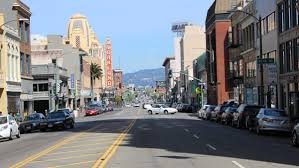
I really can’t think of a better place to be,” says Tamir Scheinok, co-founder and chief operating officer of Fluid, a company that designs e-commerce websites for the likes of North Face and Reebok.
Ten Reasons Calorie Restriction Weight-Loss Programs Fail“It’s really important for us to be in an enriching environment with bars and restaurants and a diverse community,” he says.
Cat Litter Tray BestScheinok is relocating his 100 or so employees from San Francisco to Oakland in late November.
Free Puppies For Sale In VaThe result, he says: Fluid’s rent will rise by about a third instead of doubling.Fluid is among a half-dozen tech companies moving to or expanding in Oakland this year, along with Web design company 99designs, online ad agency Huge, and philanthropic incubator Emerson Collective, headed by Laurene Powell Jobs, Steve’s widow.
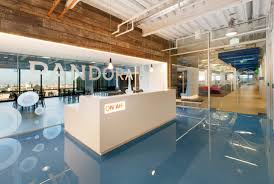
Strengthening downtown Oakland’s appeal to tech companies: proximity to many of the city’s most attractive residential neighborhoods and an ecosystem of bars and restaurants that was either built into the downtown area or has quickly sprung up to support the remodeled office space.“People worried Oakland was a liability for recruiting,” says Tim Westergren, co-founder of streaming-music service Pandora Media, which has been based in the city since shortly after its founding in 2000. “Now we’re finding it’s a plus.”Brokers and the local press engage in a who’s who of rumormongering about tech giants that are supposedly looking at space in the city. The companies include Intel and Microsoft, which didn’t return requests for comment, and Google, which declined to comment. Bass says Autodesk looks at Oakland buildings “all the time,” in search of office space for 300 to 500 workers. “We hire people at $80,000 to $100,000 a year who have to use much of their income to live in San Francisco,” he says.

Oakland officials are talking to developers about building a planned 140-acre neighborhood between downtown and the city’s airport. Coliseum City, as the proposal is called, would include a 750,000-square-foot technology park along with 3,500 housing units, 380,000 square feet of retail, and as many as three sports stadiums, though the arenas have become a subject of controversy.Whether Coliseum City becomes a reality, Oakland will remain far from the “absolute ghost town” that Fluid’s Scheinok, who’s lived in the city on and off since 1988, says he remembers. “Oakland has changed quite suddenly in the past six months,” he says. “It’s now an intersection of culture and commerce.” OAKLAND — When Uber opens its massive new headquarters near downtown Oakland next year, flooding the area with as many as 3,000 workers, it will become part of an already thriving tech scene. in Oakland over the past few years. The growth provides an early sign that the city may be on its way to becoming the next San Francisco or Palo Alto.

“I think in general there is a realization across most tech companies right now that there is unrealized value over in Oakland,” said T3 Advisors managing director David Bergeron, who helps tech clients find office space. But just as Oakland’s startup culture is making a name for itself, costs in the city are skyrocketing. Oakland’s commercial rent prices have increased by almost 34 percent this year — the biggest hike in the city’s history, according to data from JLL, a Chicago-based commercial real estate services firm. The average yearly rent for high-quality spaces in Oakland’s business district jumped from $38 per square foot in 2015, to $51 per square foot this year. That’s still cheaper than San Francisco, where average comparable rents were $75 in the first quarter of 2016, according to JLL. Rents in Palo Alto’s business district were $102 at the end of last year, according to the most recent data available. But as a possible consolation to the higher rents, Oakland startups are drawing more attention from investors.
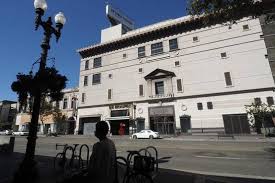
Vas Natarajan, a partner with Palo Alto-based venture capital firm Accel partners, said five years ago, the firm had no Oakland ties. Since then, the firm has invested in graphic design company 99designs and Oakland-based mobile photography company VSCO. “We’re crossing the bridge more than ever,” Natarajan said. The expansion of Uber’s headquarters into Oakland likely will inspire more tech movement to the city, but the effects may not be noticeable until the office opens next year, said Amber Schiada, vice president and director of research for JLL. Uber is renovating the historic Sears building on Broadway — a seven-story structure with 330,000 square feet of office space and plans for retail shopping on the ground floor. Uber also will open a new, expanded campus in San Francisco. Though tech accounted for just 3 percent of jobs last year, according to the Oakland Chamber of Commerce, the city already is winning out over the larger tech hubs in the eyes of some entrepreneurs.

Graphic design startup 99designs moved its U.S. headquarters to Oakland’s uptown neighborhood last summer after the company outgrew its San Francisco space. CEO Patrick Llewellyn said after five years in San Francisco, he had some reservations about making the move across the bay. “I was concerned about changing the routine too much,” he said. But after struggling to find a space in San Francisco that wasn’t too expensive or in an inconvenient location, he ended up finding his dream office at the corner of Broadway and Grand Avenue in Oakland’s uptown neighborhood. He’s outfitted the 14,000-square-foot space with all the quintessential startup trappings. The fully stocked kitchen, lined with huge windows that look out over Oakland, is complete with beer on tap, an espresso machine and a faucet that dispenses sparkling water. There’s an exercise area with weights and yoga mats, a pingpong table and showers. “We’re paying about the same as we were paying in San Francisco,” Llewellyn said, “but we’re getting double the space.

So it is significantly more cost effective.” As Oakland’s startup scene expands, so do the services in the city that cater to entrepreneurs. Organizations are popping up to train aspiring tech professionals, such as the Learners Guild and LearnTech Labs. Co-working spaces also are becoming more prominent in Oakland — Impact Hub opened in 2014 in an abandoned car showroom on Broadway Auto Row, and the Port Workspaces expanded into the Kaiser Center last year. Many entrepreneurs also take a certain amount of pride in their Oakland location. VSCO, a digital photography startup that’s been in Oakland since 2014, says its address differentiates it from the competition. “I think it really embodies how we see ourselves as a company,” said spokeswoman Elisa Richardson. “Scrappy and hardworking, but we are very diverse and we have an international community.” Other companies are trying to make sure Oakland doesn’t turn into a mirror image of the tense scene in San Francisco, where tech workers are blamed for skyrocketing rents, housing shortages and clogged streets.
Clef, an Oakland-based authentication startup, hosts weekly community dinners as part of an effort to connect techies and their non-tech neighbors. A year ago the company co-founded the Tech Equity Collaborative with the goal of creating a more diverse and inclusive tech ecosystem. The city is getting involved as well. Mayor Libby Schaaf reached out to Roofstock, an online real estate investment platform, when the company launched in Oakland last month, said CEO and co-founder Gary Beasley. “She said, ‘Listen, we’re trying to be much more business friendly, and just wanted you to know we appreciate you being in Oakland,’ ” Beasley said. In 2014 Marisa Raya became Oakland’s first official liaison between the tech community and the city. The very existence of her job is a testament to the tech sector’s growing prevalence in Oakland. Raya says that growth has pushed downtown’s vacancy rate to less than 5 percent. “That is definitely exerting some upward pressure on rents,” she said.