Water Saving Shower Head Facts
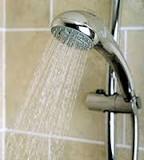
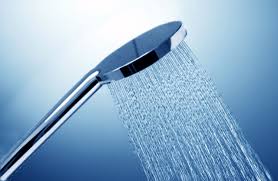
Low Flow Shower Head Types Other Low Flow Options How to buy the best low flow shower head, and a look at how much it can save you in water costs. Includes information on shower head features and water-saving technologies. If you’re like many people, you may have a shower head that offers a very satisfying shower but uses a tremendous amount of water. Or you may have the other extreme: an incredibly efficient shower head that makes you wonder if the water is turned on. The trick is to have a low flow shower head that offers a satisfying shower while using a minimum amount of water. Shower heads are measured by flow—the number of gallons they deliver per minute (gpm). Flow is affected by water pressure, measured in pounds per square inch (psi). The greater the pressure pushing water through pipes and shower heads, the greater the volume of water forced out. Water pressure on the high side—80 psi, for example—will push a greater amount of water through a shower head than low water pressure, say 20 psi.

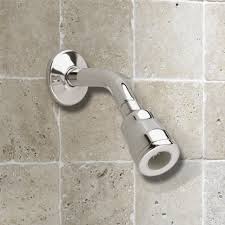
This same principle is in effect when you don’t turn on the water full blast. Water pressure varies from community to community and even from house to house. A few years ago, shower heads delivered about 5 to 8 gallons per minute (gpm) at 80 psi. The current standard for low flow heads is 2.5 gpm at 80 psi. Some low flow shower heads deliver only 1.6 gpm. A quality low flow shower head will feel good at both high and low water pressures. Some have flow restrictors that can be reversed or removed to allow more water through on low-pressure lines, allowing you to achieve the right amount of water flow for your water pressure. Others have restrictors that work automatically. For example, Teledyne Water Pik, at about $30, offers one highly rated “Shower Massage” shower head that automatically senses the available water pressure and adjusts to deliver 2.5 gpm. Judge your present shower head’s flow rate by holding a gallon container under the head and clocking the time it takes to fill.
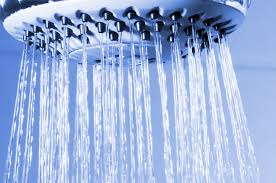
If it fills in 15 seconds, the flow rate is about 4 gpm. If it’s full in 10 seconds, the flow rate is closer to 6 gpm. A low flow shower head should take 24 seconds or more. There are two main types of low flow shower heads: the regular, stationary type and hand-held models attached to a flexible hose. Most hand-held shower heads can be clipped onto a wall-mounted hanger, swivel, or bar for hands-free showering. The flexible hose screws directly onto the shower arm, onto a diverter valve between a standard shower head and the shower arm, or onto a deck-mounted diverter valve on a bathtub. Hand-held models are generally a bit more expensive because they include a flexible hose, but they are also more versatile and use water more efficiently by directing the flow to where you want it. As a class of fixtures, they also offer a slight energy savings over stationary heads because the water travels a shorter distance between the shower head and your body, cooling less in the air.

The net result is that you can adjust the water temperature slightly lower. Prices for low-flow heads range from less than $10 for simple, no-frills plastic ones to more than $100 for designer heads. The cost of a particular shower head has little to do with how well it delivers a satisfying shower.
Pink Puffy Short Prom DressesCost is more a gauge of features and the construction materials and finish.
T-Shirt Manufacturers In Georgia One of the main features of the best low flow shower heads is the ability to adjust spray settings—narrow to wide, spray only, pulse, and so forth.
Teak Wood Flooring For ShowersThis is particularly handy if different family members like different types of spray. The easiest types to use are those that have an adjustment ring or lever on the outside of the head so that you don’t have to reach into the center of the water stream to adjust them.

One other handy, water-saving feature is a shutoff at the head. This cuts water to a trickle while you soap up or wash pets or kids. There are two other devices that aren’t really shower heads but help save water in the shower: flow-control inserts (basically a washer with a small hole to reduce water flow) and shower shut-off control valves that reduce flow and provide on/off control above the head. These fit between the shower pipe (arm) and shower head and cost about $14. Some shower heads combine water-saving technologies. For example, the Evolve shower head pictured top right offers low flow at 1.59 gallons per minute but also features an ingenious valve that allows you to save water and the energy used to heat it before you step into the shower. You can turn on the water to let it warm up and go brush your teeth—the valve automatically reduces the flow to a trickle once the temperature reaches 95 degrees Fahrenheit. Then, when you’re ready to shower, you simply flip the valve for full flow.

Evolve estimates the head saves about 8 gallons of water and the energy to heat it for every five- minute shower. Over a year, this can save you more than 2,000 gallons of water. It costs about $30. NEXT SEE: Thermostatic Shower Valve Buying GuideYou know that moment well: You’ve turned on the shower, but there’s no way you’re getting into it quite yet. The water’s not hot enough. So you start your routine, whatever it is — doing some chores, answering some e-mails — while the water runs and runs, much of it already hot. Shower wonks have dubbed this extremely common pattern “behavioral waste,” or waste that occurs because of human habits. And there appears to be quite a lot of it. “Typically 20 percent of every shower, the duration, is essentially lost,” says Jonah Schein, technical coordinator for homes and buildings for the EPA’s WaterSense program. “The average shower is a little over eight minutes long, so that’s a good chunk of the shower that we’re not actually being able to utilize.”
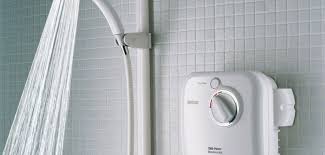
For a standard shower head, every minute wasted equates to 2.5 gallons of water — and insofar as some of it is warm, says Schein, “that’s energy-rich water that we’re running down the drain.” And research conducted by Lawrence Berkeley National Laboratory has suggested that the waste levels may be even higher — 30 percent of shower water overall and 41 percent of “hot water energy.” Run the numbers and there’s no getting around the fact that we have a gigantic problem here, people. Showering drives almost 17 percent of water use in homes, and an average American family uses some 40 gallons of water per day in the shower. This amounts to 1.2 trillion gallons of water in the United States each year, says EPA, “enough to supply the water needs of New York and New Jersey” over the same time period. If 20 percent of that is wasted, well, you’re talking about over 200 billion gallons, in a world where gigantic states (California) and megacities (Sao Paulo, Brazil) are suffering from drought and water scarcity problems are expected to become still worse in the decades ahead.
What’s more, because water coming out of shower heads is supposed to be hot water, showers are also energy hogs. They’re typically one of the largest drags on the hot water heater in the home, and water heating itself accounts for almost 17 percent of total home electricity, according to the Department of Energy. Thus, cutting back on hot water waste in showers has a double benefit, saving water and power and money on two separate bills. But how do you get people to do it? “The shower is a really personal thing, and people don’t want to really change a whole lot,” notes Troy Sherman, one of the founders of Evolve Technologies, which makes water-saving shower products. The point was made rather unforgettably in 1992, when the U.S. government mandated that shower heads get more efficient — reducing the top flow rate down to 2.5 gallons per minute. This led to a great volume of complaints that shower flows were too weak — including a classic 1996 “Seinfeld”episode in which the gang got so peeved at newly installed low-flow shower heads that they turned to the black market for an alternative.
People “desire hot water now, and they desire it never running out in their shower,” explains Gary Klein, a consultant on water and energy sustainability. Human desires notwithstanding, water and hot water waste in showers is quickly emerging as one of the biggest home energy and efficiency issues, in part because many others — energy hog refrigerators, say — have been dealt with by ever improving appliance standards. Moreover, the problem of behavioral waste seems to be getting worse, for a surprising reason — people today have bigger houses, meaning longer pipes. “It’s taking longer and longer for hot water to arrive at the shower or other points of use over the home,” says Sherman. “So people have started to develop a habit of turning on their shower, then leaving and walking away, and going and doing other things as they wait for the hot water to arrive.” So, what are the solutions — at least for those of us who are actually willing to make some changes? The EPA’s WaterSense program now labels water efficient shower heads, certifying those whose flow rates are below 2 gallons per minute.

The agency asserts that “the average family could save 2,900 gallons per year” with one of these shower heads — and that in energy terms, that translates into “370 kilowatt hours of electricity annually, enough to power a house for 13 days.” But of course, with low-flow rates, some consumers are likely to wonder whether such shower heads give them enough water force. The EPA’s Schein says he’s “confident” these shower heads do so. One issue with low-flow shower heads is that a double whammy can occur when you both reduce the flow rate and also live in a building where the water pressure is already low. However, there’s a way to address this called “pressure compensating flow regulation,” which “lets us vary the amount of water coming through the shower head based on the flow rate, so that we’re delivering a fairly even amount of water regardless of the pressure in the home,” says Evolve Technologies’ Sherman. The EPA estimates that if every U.S. home used these new certified shower heads, the savings on water bills could amount to $2.2 billion — along with $ 2.6 billion in energy bills.
In terms of water that doesn’t go to waste, that could save 260 billion gallons each year. Evolve Technologies has designed a “thermostatic shut-off valve” that can be installed behind the shower head. The device lets cold water flow out when the shower is first turned on, but then tamps down on any more flow when water hotter than 95 degrees arrives. So when water stops flowing in the shower, you know hot water has arrived, and then you can get in and pull a cord to manually turn the flow back on. Here’s an image of the device, courtesy of Evolve Technologies: According to Sherman, 750,000 of these devices are now in homes because they’ve been included in a number of large energy efficiency programs run by utility companies. A considerably more expensive home retrofit, meanwhile, can help your home recover some of the heat that is lost from warm water cycling down the drain. There’s a great deal to be recovered, because the Department of Energy estimates that a stunning 80 percent to 90 percent of the heat energy that our home water heater adds to our water ends up going down the drain.
That energy could be used to reheat more water for use in the shower, dishwasher or washer. That energy can be captured through a drain water heat recovery system installed in the drain itself. The system uses a conductive metal — like copper — to capture some of the heat from the departing water and transfer it to cold water that needs to be heated up. In essence, it’s a way of taking energy that would be lost and cycling it back into the home’s water system. And then, there’s the issue of trying to cut down on the waste of cold water before the hot water even arrives at the shower. To address this, the company Advanced Conservation Technology Inc. manufactures a device that sits beneath the sink at the water outlet that’s furthest from your hot water heater, and can be activated wirelessly or by a button. When you turn it on, the device sends the lukewarm or cool water that’s sitting in your pipes to the water heater, thus allowing new hot water to come to where you want it to be.
The company says that the result is “getting hot water to the fixtures three to four times faster (on average)” — and of course that means less cold water running out when you turn the shower on. The fact that all these fixes have to be designed, of course, suggests that our water and water heating systems are highly inefficient. And while at least some of the technologies above aren’t that expensive, they still tend to be the exception rather than the rule in most homes. In sum, there’s a long way to go before our showers cease to be the major energy and water wasters that they are. But there’s much we can do to try to fix the problem. “There’s a tremendous amount of water and a tremendous amount of energy to be saved,” says the EPA’s Schein. Thanks for reading our new Energy & Environment coverage! You can sign up for our weekly newsletter here and follow our tweets here. Also in Energy & Environment: “This argument against Teslas just doesn’t make any sense” “Forget about that snowball — here’s what climate change could actually do to our winters” “Knowing your ‘energy personality’ could save you a lot of money“