What Causes Mold In Ac Unit
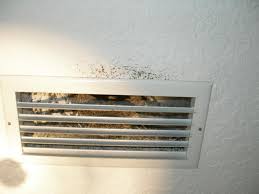
Some people believe that AC ducts are destined to become moldy. While all AC ducts will likely grow some mold and will become discolored with visible mold or visible dust to some degree, it is not normal or healthy for ducts to become excessively moldy, or to produce a strong mold odor. Mold spores from AC ducts result in health problems and even mold odors in the absence of spores have been shown to cause health problems. Keeping ducts free of excessive mold is important. The information in this blog is intended to provide readers with information on: 1) Some reasons why AC ducts become moldy. 2) The importance of proper sizing of AC units. 3) In addition it draws attention to a very common indoor air quality problem called entrainment. Entrainment is when AC units pull contaminated air from inside attics or walls or other undesirable areas. The following information is taken from a Broward County mold inspection we conducted on 11-17-07 it shows an actual example of how ducts became moldy and gives recommendations at the end.
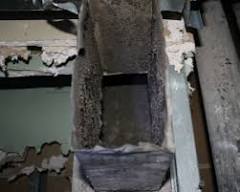
The property inspected is a one story single family Broward county house built in 1974. Client reported mold growing on AC vent registers. The mold started a few weeks ago. The client reported that a new larger AC unit was installed about 3 months prior to the mold starting. This inspection is for mold conditions at the AC registers only. In the above referenced area the inspector observed a new air conditioner. The serial number on the unit indicates that it is a 4 ton unit, thus is it rated to cool a 2400 sf house. This AC unit is just a little large for this house. The inspector also observed a new condenser / compressor unit. The serial number indicates that it is a 3.5 ton unit thus designed to cool a 2100 sf house. This is also slightly large for the house. You have a newer larger AC unit. The size of this newer AC unit is a major reason for why you have humidity related cladosporium on your AC registers that were previously not moldy. The previous AC unit in use about 3 months ago was smaller than this AC system thus would have been more efficient at drying the houses air before cooling the houses air and shutting down.
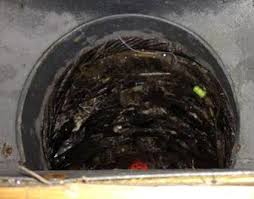
If an AC is to large it shuts off after the air is cooled but before the air is properly dried / dehumidified. Air that is not dehumidified and has a humidity above 60%RH to 65%RH can and often does cause humidity problems in Florida homes. The above photo is of cladosporium mold growing in your registers.
Cheap Xl Prom Dresses Another reason why you have mold problems now is because of the two holes in your AC return.
Bob'S White Bedroom FurnitureThese holes in the wall studs allow the AC to pull humidity into the AC each time the AC turns on, this phenomenon is called entrainment and is a common cause of mold and humidity problems.
Used Furniture Stores In Hiram Ga Yes all metal studs have these holes, but it is not typical for these open holes in the studs to be exposed and in such close proximity to an AC return.
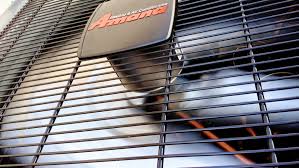
Where does the humidity in your walls come from? it comes room the attic, the attic in turn gets the humidity from outside via the soffit vents like the one in the above photo. Why did this problem not occur till recently? the older smaller AC was more efficient at drying air as stated above and thus was able to handle the humidity load created by these openings. More photos of mold on and around your AC registers. Note that the tiny black spots on and around AC registers are very typical examples of cladosporium spheasperium, or cladosporium cladosporidies mold. This mold problem is caused by elevated humidity in your ducts. This is not likely to cause a toxic reaction, but this mold may result in allergic reactions or act as an asthma trigger in sensitive persons. The real concern is if it is growing excessively deep in your ducts then you will have much more mold than you can see on the registers. Mold growth in the ducts can and often causes health complaints.
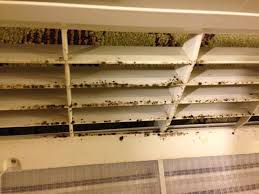
Excessive mold was not observed in your AC unit but you are recommended to have your ducts cleaned in accordance with NADCA standards or replaced.Note that the tiny black spots on and around AC registers are very typical examples of cladosporium spheasperium, or cladosporium cladosporidies mold. Based on this inspectors observations and conclusions your inspector recommends using good quality foil mastic tape or other methods to seal two openings in your AC return wall studs. Have a AC company install a humidistat and set it to around 50% to 60%RH always maintain indoor humidity between 30% and 60%RH. Most people live with a little mold in the ducts and have no problems. Mold spore levels in your air was very low. No mold odors were detected. Much of the mold appeared to be primarily in the ends of the ducts just behind the registers. Have an AC company clean the mold from the registers and from the ends of the ducts just behind the registers. Duct removal or good professional cleaning in accordance with NADCA standards is recommended if additional hidden mold is discovered inside the ducts during cleaning.

Daryl Watters is president of A Accredited Mold Inspection Service, Inc. He provides home, mold, and indoor air quality investigations in South Florida. He is also the creator of MIR forms designed to aid inspectors in the production of computer generated indoor air quality and mold inspection reports.The presence of mold in an HVAC system is a common complaint. Mold is a sneaky little bugger. It can grow and proliferate and make building occupants sick without ever being seen. And the fastest way to spread mold through a building is through a forced-air HVAC system.The reason this complaint is so common is that mold is always present in your buildings and your HVAC system to the extent that it is present in your building’s environment. There will be more mold in humid weather and less in dry weather. You will never get rid of it completely, but you can control it. All it needs to grow is moisture and food. Take those away and the mold goes away. for residential and light commercial mold remediation productsAccording to the U.S. EPA, you should routinely inspect your HVAC systems, not just for mold, but for moisture.

Look at drain and condensate pans to make sure they are draining properly. If they are plugged, the moisture that accumulates will become a mold factory. Also make sure that all HVAC ducts and system components such as air handlers, blowers, plenums and the like are free of any moisture.If, despite regularly inspecting your system, you are still getting complaints about it (mold starts to grow in as little as 48 hours), here are some tips for cleaning it up:1.) Turn off your HVAC system.2.) Everyone involved in this cleaning should wear at least an N-95 respirator3.) Replace anything porous, such as filters or insulation that has become wet. Double-bag the waste using at 6-mil or thicker plastic bags.4.) Use wet vacuums to clean out any standing water.5.) Use an EPA registered disinfectant labelled for HVAC use to clean non porous surfaces (Duct work, coils, plenums, pans, etc) of mold, mildew and other dirt. BBJ MMR-II ready-to-use disinfectant and mold cleaner will kill and remove mold, mildew and odor causing bacteria.6.)